
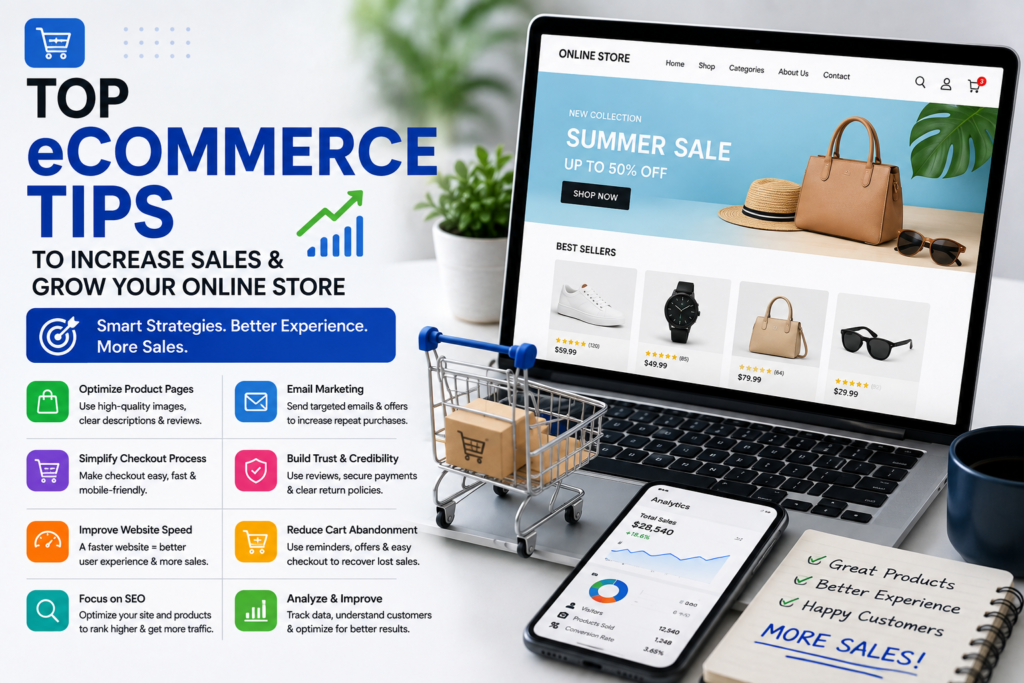
Top eCommerce Tips to Increase Sales and Grow Your Online Store
Running a successful eCommerce business takes more than simply launching an online store and adding products. Sustainable growth comes from creating a smooth shopping experience, attracting the right customers, optimizing your store for conversions, and continuously improving based on real customer data.
Whether you’re running a Shopify store, WooCommerce website, or selling through social commerce platforms, small improvements across your customer journey can have a significant impact on sales and profitability.
In this guide, we’ll cover practical eCommerce tips that can help you improve your online store, increase conversions, reduce abandoned carts, and build stronger relationships with customers.
1. Optimize Your Product Pages
Your product pages play a major role in converting visitors into customers.
A potential buyer should be able to quickly understand what the product is, why they need it, and what makes it different from competing products.
Focus on:
Clear and persuasive product titles
Detailed but easy-to-read descriptions
High-quality product images
Relevant product benefits and features
Clear pricing and availability
Customer reviews and ratings
Strong calls to action
Avoid relying entirely on manufacturer descriptions. Original, customer-focused content can make your products easier to understand while also giving search engines more useful information.
2. Use High-Quality Product Images
Online shoppers can’t physically examine your products before purchasing, so images need to do the job of showing customers what they’re buying.Use clear, professional images that show products from multiple angles. Where appropriate, include lifestyle images that demonstrate the product in use.
For eCommerce stores, image quality should be balanced with performance. Large, unoptimized images can slow down your website and negatively affect the shopping experience.
3. Make Checkout Simple
A complicated checkout process can cause customers to abandon their purchases.
Keep the checkout experience as straightforward as possible. Avoid unnecessary form fields, unexpected costs, confusing navigation, or unnecessary steps.
Clearly display important information such as:
Product and order totals
Shipping costs
Delivery information
Available payment methods
Return or refund policies
The easier it is for customers to complete their purchase, the fewer opportunities there are for them to leave before placing an order.
4. Improve Website Speed
Website performance matters throughout the buying journey.
Slow-loading pages can frustrate visitors, especially when they’re browsing products or trying to complete a purchase on mobile devices.
Consider optimizing:
Product images
Videos and animations
Plugins and apps
Website code
Hosting performance
Browser caching
Regularly testing your website can help identify performance problems before they begin affecting customers.
5. Build Trust Before Asking for the Sale
Customers are more likely to purchase when they feel confident about a business.
Your website should clearly communicate why customers can trust you. This can include genuine reviews, testimonials, secure payment options, clear contact information, shipping details, and transparent return policies.
Trust signals are particularly important for new visitors who may be discovering your brand for the first time.
Search engine optimization can help your store attract people who are actively searching for the products or solutions you offer.
Start with the fundamentals:
Research relevant search terms
Optimize product titles and descriptions
Create useful category pages
Improve page titles and meta descriptions
Use descriptive URLs
Add internal links
Optimize product images
Publish helpful content
Make your website mobile-friendly
SEO is a long-term strategy, but a well-optimized store can continue attracting organic traffic without relying entirely on paid advertising.
7. Reduce Cart Abandonment
Not every visitor who adds a product to their cart will complete the purchase.
High cart abandonment rates can indicate problems with the checkout experience, unexpected costs, limited payment options, or a lack of trust.
To improve checkout completion, consider:
Offering multiple payment methods
Showing shipping costs clearly
Keeping checkout simple
Providing clear delivery information
Adding trust signals
Sending abandoned-cart reminders when appropriate
Understanding why customers abandon their carts can help you make targeted improvements rather than guessing what needs to change.
8. Use Email Marketing to Bring Customers Back
The first purchase doesn’t have to be the end of the customer relationship.
Email marketing can help eCommerce businesses stay connected with existing customers and encourage repeat purchases.
You can use email campaigns for:
Welcome messages
New product announcements
Special offers
Product recommendations
Abandoned carts
Post-purchase follow-ups
Customer retention campaigns
Building a permission-based email list gives your business a valuable channel for communicating directly with customers.
9. Use Analytics to Understand Customer Behavior
Data can help you understand what’s actually happening inside your online store.
Monitor important metrics such as:
Conversion rate
Average order value
Traffic sources
Product performance
Cart abandonment
Returning customers
Revenue by channel
Analytics can reveal where customers are dropping out of the buying journey and which products or marketing channels are generating the best results.
Use these insights to make informed changes and continuously improve your store.
10. Create a Consistent Shopping Experience Across Channels
Today’s customers may discover your business through Google, Instagram, Facebook, TikTok, or another platform before eventually visiting your website.
Your branding, product information, pricing, and customer experience should remain consistent across these channels.
For businesses selling through multiple platforms, keeping product catalogs and information organized can also reduce errors and create a more reliable customer experience.
Keep Testing and Improving
There is no single eCommerce strategy that works perfectly for every business.
What works for one store may not work for another because of differences in products, customers, pricing, competition, and market position.
Test different elements of your store, including:
Product page layouts
Headlines
Calls to action
Images
Offers
Checkout experience
Promotional campaigns
Then use your data to determine what actually improves results.
Turn Your Online Store Into a Growth Engine
Growing an eCommerce business requires continuous optimization. From product pages and website performance to SEO, checkout, customer trust, and marketing, every part of the customer journey can influence your results.
The most successful online stores don’t simply focus on getting more traffic. They focus on turning more of that traffic into customers and encouraging those customers to come back.
Whether you’re starting a new online store or looking to improve an existing one, the right strategy, structure, and optimization can create a stronger foundation for long-term growth.
Ready to Improve Your eCommerce Store?
If you need help building, optimizing, or growing your online store, explore our eCommerce Services to see how Primora Commerce can help you create a stronger online shopping experience and turn more visitors into customers.