Custom Website Design: How a Professional Website Helps Your Business Grow
A professionally designed website is more than an online presence—it is one of the most important assets for a modern business. Your website is often the first place potential customers interact with your brand, and a clear, professional experience can make the difference between a visitor staying on your site or leaving for a competitor.
Whether you’re launching a new business, building an online brand, or redesigning an outdated website, custom website design can help you create a digital experience that reflects your brand, engages visitors, and supports your business goals.
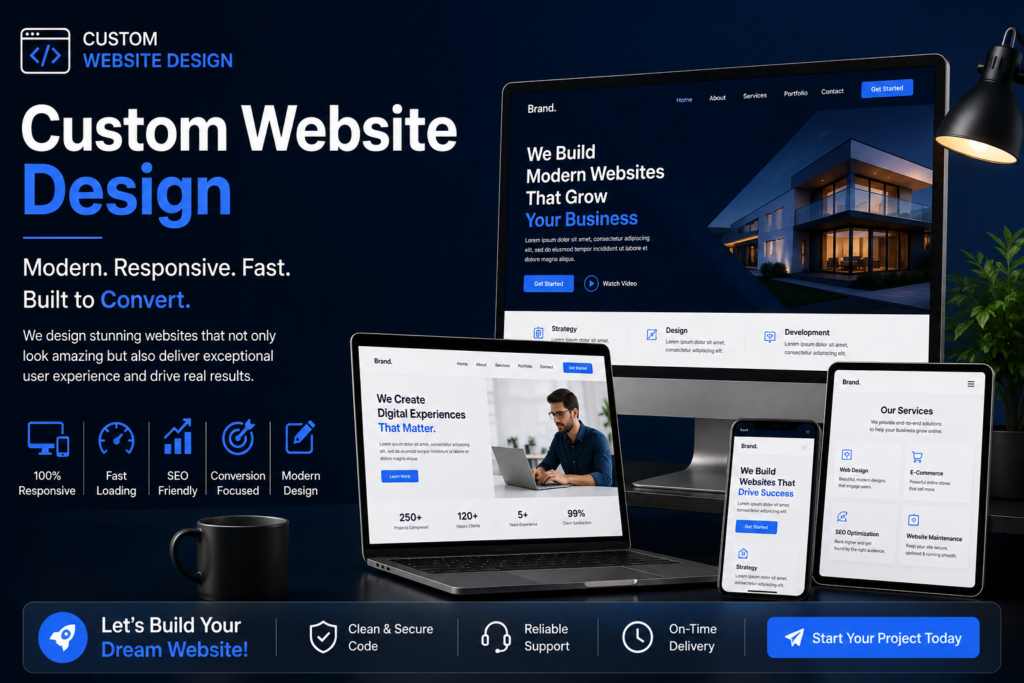
A successful website should look professional, load quickly, work smoothly across devices, and make it easy for visitors to find the information they need. More importantly, every page should have a clear purpose and guide visitors toward taking the next step.
Why Professional Website Design Matters
A website represents your business 24/7. Even if your products and services are excellent, an outdated, confusing, or slow website can make potential customers question the credibility of your brand.
A professional website design helps create a strong first impression while making your business easier to understand and interact with.
An effective website can help you:
Build trust and credibility
Present your brand professionally
Improve the user experience
Generate more leads and inquiries
Increase online sales
Make your business easier to find through search engines
Provide a consistent experience across desktop, tablet, and mobile devices
The goal isn’t simply to create a website that looks attractive. It should be designed around your customers and your business objectives.
What Makes a High-Performing Website?
A successful website combines visual design with functionality, usability, and performance. Several elements work together to create an experience that encourages visitors to stay, explore, and take action.
1. Clean and Modern Design
Your website should immediately communicate who you are and what your business offers.
A clean layout, professional typography, consistent branding, high-quality visuals, and an organized structure can make your website easier to understand while creating a stronger impression of your business.
Good design also means avoiding unnecessary elements that distract visitors from your main message.
2. Mobile-Responsive Design
A large portion of website traffic comes from smartphones and tablets. If your website doesn’t adapt properly to smaller screens, visitors may struggle to read content, navigate menus, fill out forms, or complete purchases.
Responsive design ensures that your website provides a smooth experience across different screen sizes.
Your pages should be easy to navigate whether someone visits from a desktop computer, tablet, or smartphone.
3. Fast Website Performance
Website speed affects both user experience and business performance.
Visitors generally don’t want to wait for slow pages to load. A fast website makes it easier for users to browse your content, view products, submit inquiries, and complete purchases.
A performance-focused design should consider factors such as optimized images, efficient page structure, lightweight elements, and reliable hosting.
4. Simple and Intuitive Navigation
Visitors should not have to search through your website to understand where to go next.
Clear navigation helps users quickly access important sections such as:
Services
About
Portfolio
Products
Contact
Pricing
Blog
A well-organized navigation structure also helps search engines understand the relationship between different pages on your website.
5. Clear Calls to Action
A website should guide visitors toward meaningful actions.
Depending on your business, a call to action could encourage visitors to:
Request a Quote → Book a Call → Contact Your Business → Buy a Product → Get Started
Strategically placed calls to action make it easier for visitors to understand what they should do next.
Instead of simply telling visitors about your business, your website should make taking the next step simple.
SEO-Friendly Website Structure
Great design and SEO should work together.
A website can look impressive but still struggle in search results if its structure isn’t optimized properly. An SEO-friendly website should have a logical page hierarchy, descriptive URLs, optimized titles and headings, useful content, internal links, mobile-friendly layouts, and a structure that search engines can easily crawl.
This is especially important when creating service pages and content designed to attract potential customers through organic search.
When design, content, technical performance, and SEO are considered together from the beginning, your website has a stronger foundation for long-term growth.
Custom Design vs. Generic Website Templates
Templates can be useful for businesses that need a simple website quickly. However, they can also create limitations when your website needs to communicate a specific brand identity or provide a customized customer experience.
A custom approach allows important elements of the website to be designed around your business, including:
Brand identity
Target audience
Content structure
Customer journey
Conversion goals
Services or products
Website functionality
This doesn’t mean every website needs to be built from scratch. The important thing is creating a website that fits the business rather than forcing the business to fit a generic layout.
Designing Websites for Business Growth
A website should support your larger digital marketing strategy.
For example, a service-based business may need landing pages that generate inquiries, while an eCommerce brand may need a product-focused experience that makes browsing and purchasing easy.
The right design depends on what you want your website to accomplish.
At Primora Commerce, our approach focuses on creating websites that combine modern design, responsive layouts, usability, performance, and conversion-focused structure. From business websites and landing pages to eCommerce experiences, each project is planned around the needs of the brand and its customers.
When Should You Redesign Your Website?
Not every website needs to be replaced immediately. However, a redesign may be worth considering if your current website:
Looks outdated
Doesn’t work properly on mobile devices
Loads slowly
Is difficult to navigate
Doesn’t reflect your current brand
Has poor conversion rates
Makes it difficult for customers to contact you
Has an outdated or confusing structure
A redesign isn’t simply about making a website look newer. It is an opportunity to improve the overall user experience, performance, content structure, and conversion journey.
Build a Website That Works for Your Business
Your website should do more than simply exist online. It should communicate your value, establish credibility, provide a smooth user experience, and help visitors take action.
A thoughtful custom website design combines modern UI/UX, responsive development, performance optimization, SEO-friendly structure, and conversion-focused content to create a stronger foundation for your online growth.
If you’re ready to build a professional website that represents your brand and is designed around your business goals, explore our Custom Website Design Services page or contact Primora Commerce to discuss your project.